
LoneStar Drilling & Elevator Caissons LTD.
Micropiles
Precision Foundation Support for
Challenging Conditions
Micropiles—sometimes referred to as minipiles—are small-diameter, drilled and grouted piles used for foundation support and ground stabilization. Despite their size, they offer exceptional strength and versatility, making them an ideal solution for both new construction and retrofit applications, especially in areas with difficult access, low headroom, or unstable ground conditions.
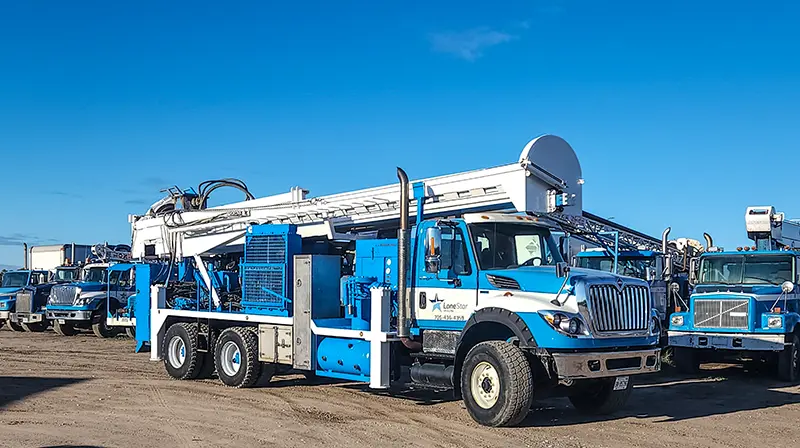
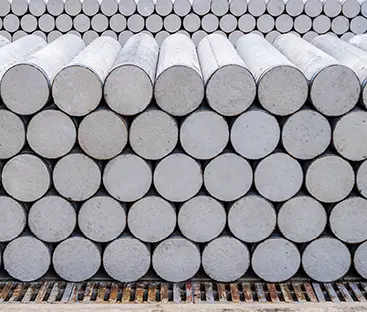
One of the biggest advantages of micropiles is their adaptability. They can be installed in tight, confined spaces—like tunnels, or beneath existing structures—where traditional piling equipment can’t operate. Because the installation process produces minimal vibration and noise, micropiles are especially well-suited for sensitive environments such as heritage buildings, hospitals, or urban construction sites.
Micropiles also shine in complex geological settings, performing well in a variety of soil and rock types. Their ability to resist both tension and compression makes them suitable for applications like underpinning existing foundations, stabilizing slopes, and providing seismic reinforcement. While they may be more costly than some traditional piling methods, micropiles are often the most cost-effective solution in scenarios where space is limited, ground conditions are variable, or access is restricted.
Typically measuring 300mm or less in diameter, micropiles are installed by drilling a borehole and filling it with high-strength grout. A steel reinforcement bar, usually a high-tensile threaded rod, is inserted into the hole to provide the necessary tensile and compressive capacity. Finally, cement grout is pumped in to encase the reinforcement and bond the pile to the surrounding ground. The result is a high-capacity pile installed with precision, ideal for situations where accuracy and strength are non-negotiable.